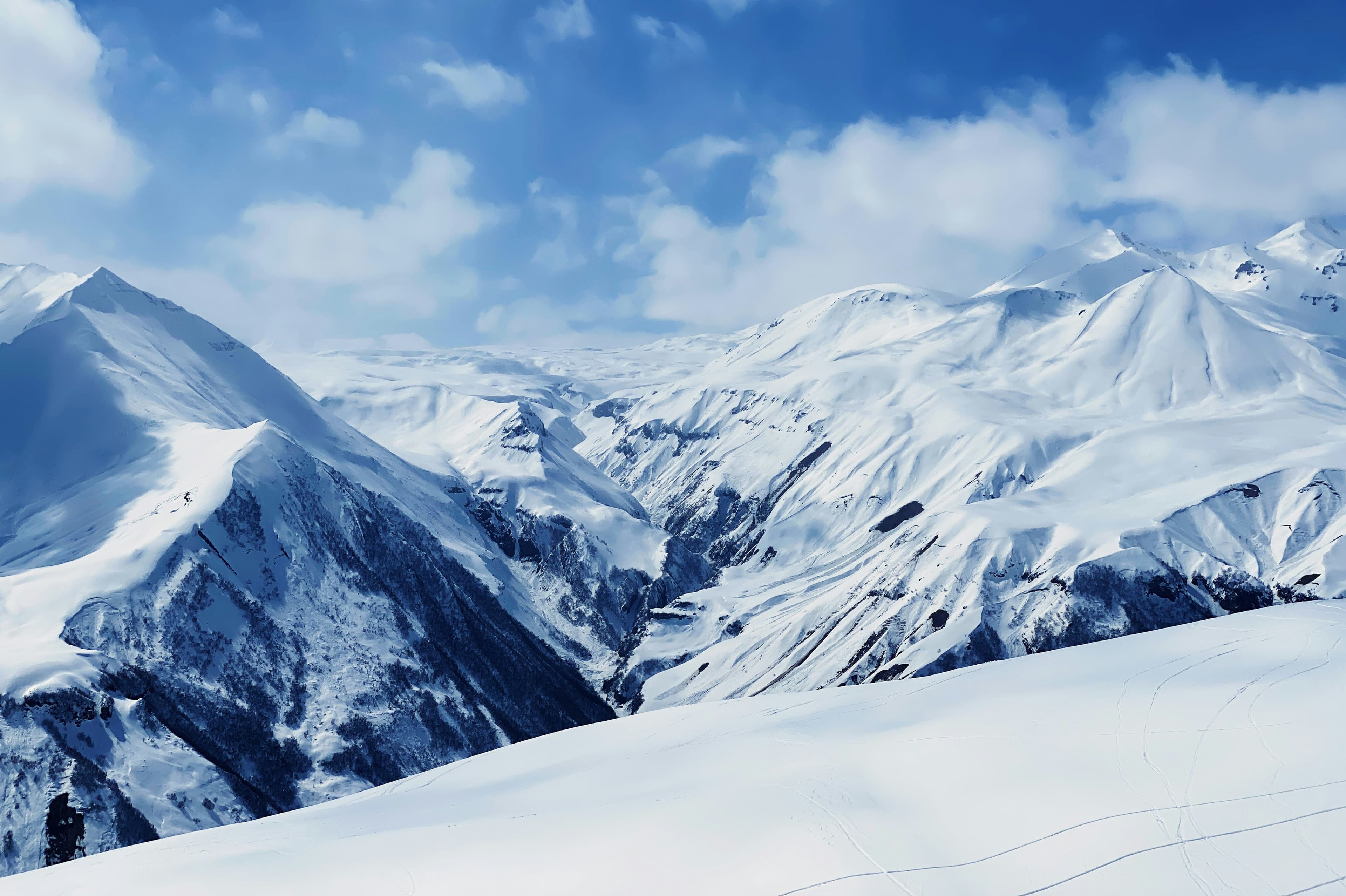
Most people who come here say the same thing in the first forty-eight hours: why has no one told me about this place?
Georgia is not a new destination. It is an ancient one that the rest of Europe is only now beginning to find.
This page explains what you are looking at — and why it matters that you are looking at it now.
What you need to know. Briefly.
Georgia sits at the eastern end of the Black Sea, where the Caucasus mountains form the border between Europe and Asia. It is not a new destination — it is an ancient one that the rest of Europe is only now beginning to find.
The mountains are serious: Gudauri sits at 2,196 metres, with terrain that runs from confident intermediate to expert backcountry, and snow that falls in volume through January, February, and March. The wine is genuinely unlike anything else on the continent: Georgia has been making wine in clay vessels buried underground for eight thousand years, and the tradition is intact.
The food is its own thing entirely — not influenced by the neighbours, not derivative of anything you have eaten before. The hospitality is the kind that makes guests feel obligated to return, because Georgians treat a visitor as a specific category of person deserving specific honour.
Almost no one from Slovakia or Greece is doing this yet. That is the whole point.
THE MOUNTAIN
The mountain. What skiers need to know.
Base elevation: 2,196 metres. Gondola summit: 3,307 metres. Vertical drop: over 1,400 metres. 57 kilometres of marked runs.
The resort faces north, which means snow holds its condition well into late March even as the days lengthen.
Pistes stay untracked into the afternoon on a weekday. On a clear February day, the run from the gondola summit to the valley base — nearly 1,400 vertical metres — can be done with almost no one on it.
Non-skiers are welcome. The Sommelier tier in particular — with its focus on wine, food, and the Kakheti programme — is well suited to travellers whose primary interest is culture rather than skiing.
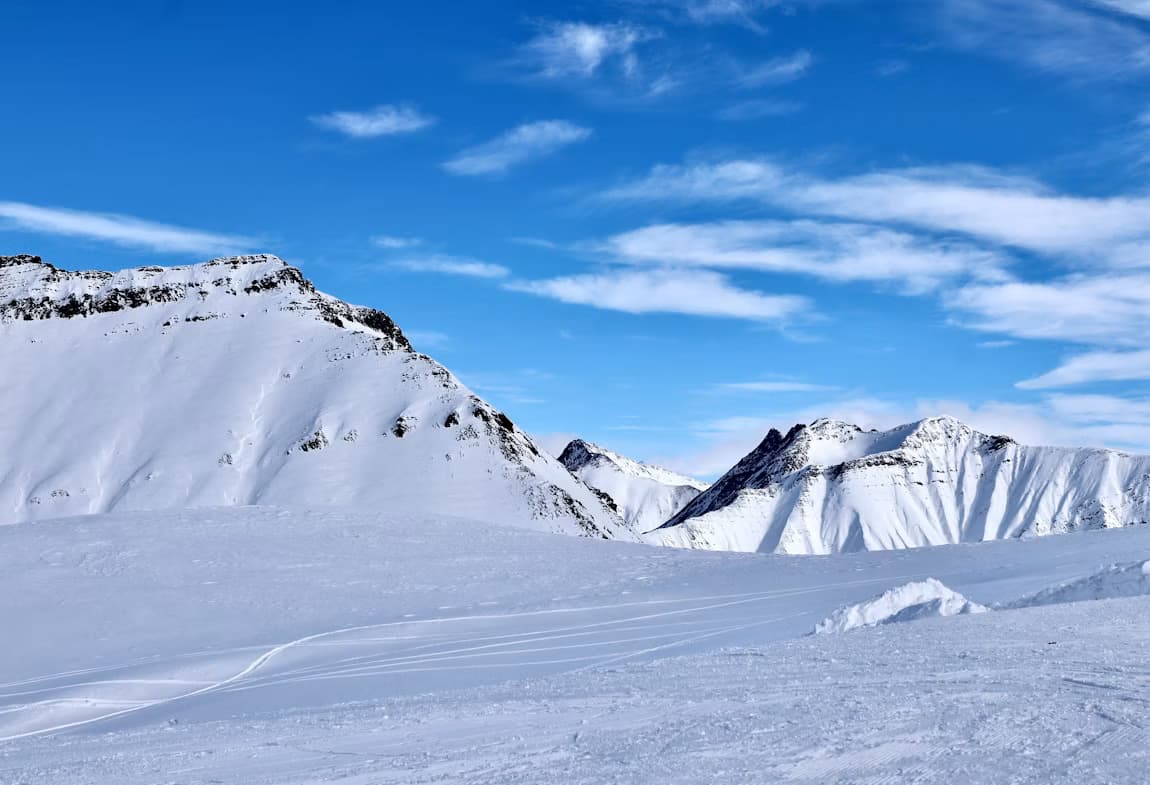
The New Gudauri Gondola rises from the village to the main ridge at dusk. The view from the summit — northwest along the Caucasus range toward the Russian border, southeast toward the Alazani Valley and Kakheti — is the kind of view that makes people stop talking.
It is on this gondola, in fading light, that the Summit & Vine trip formally begins on Day 2. It is not staged. It is just the mountain, being itself.
Eight thousand years of winemaking. One tradition unlike anything else.
THE WINE
The oldest evidence of wine production anywhere on earth was found in Georgia — dating to approximately 6,000 BC. The vessel that made it possible is the qvevri: an amphora of fired clay, sealed with beeswax, buried underground to the lip. The grape is saperavi — dark-skinned, tannic, producing wines of extraordinary depth. The amber wine is Rkatsiteli skin-contact, left on its skins through fermentation until it turns the colour of burnt orange. Georgia invented what natural wine circles in Paris, London, and Copenhagen have been talking about for the past decade.
THE FOOD
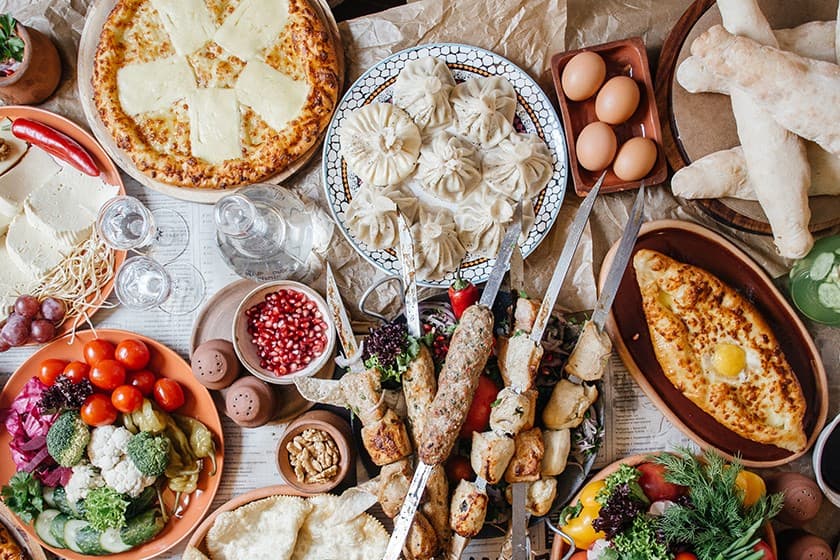
Georgian cuisine shares a region with Turkey, Russia, Armenia, and Iran, and resembles none of them. Khachapuri — bread filled with cheese and egg — is specific to region. Satsivi is cold chicken in walnut sauce. Churchkhela is a grape-juice-and-walnut candy that hangs in the market like jewellery. Barbarestan — the restaurant in Tbilisi where Summit & Vine guests dine on Day 8 — is built around the 1872 cookbook of Duchess Barbare Jorjadze, the first Georgian cookbook published by a woman. Its tasting menu is an eight-course archaeology of the tradition.
THE SPIRIT
Chacha is Georgian grape pomace spirit: clear, strong, and served at the end of a supra with the formality of a toast. It is not offered as a novelty. It is the punctuation mark at the end of a Georgian meal, and it arrives when the tamada decides the evening is complete.
THE SUPRA
The Georgian feast. Not a dinner party — a ritual.
The supra is a long table, more food than the table can hold, wine that is poured and refilled without ceremony, and a tamada — the toast-master — who leads the group through a specific sequence of toasts that covers: Georgia, guests, love, the dead, children, and peace.
The toasts are not brief. The tamada is not ironic. The supra lasts hours and ends when the tamada decides it ends.
Summit & Vine guests experience two supras — a welcome supra in Gudauri on Day 2, and the grand supra at Twins Wine Cellar in Kakheti on Day 6. The grand supra at Twins is the dinner the whole trip has been building towards.
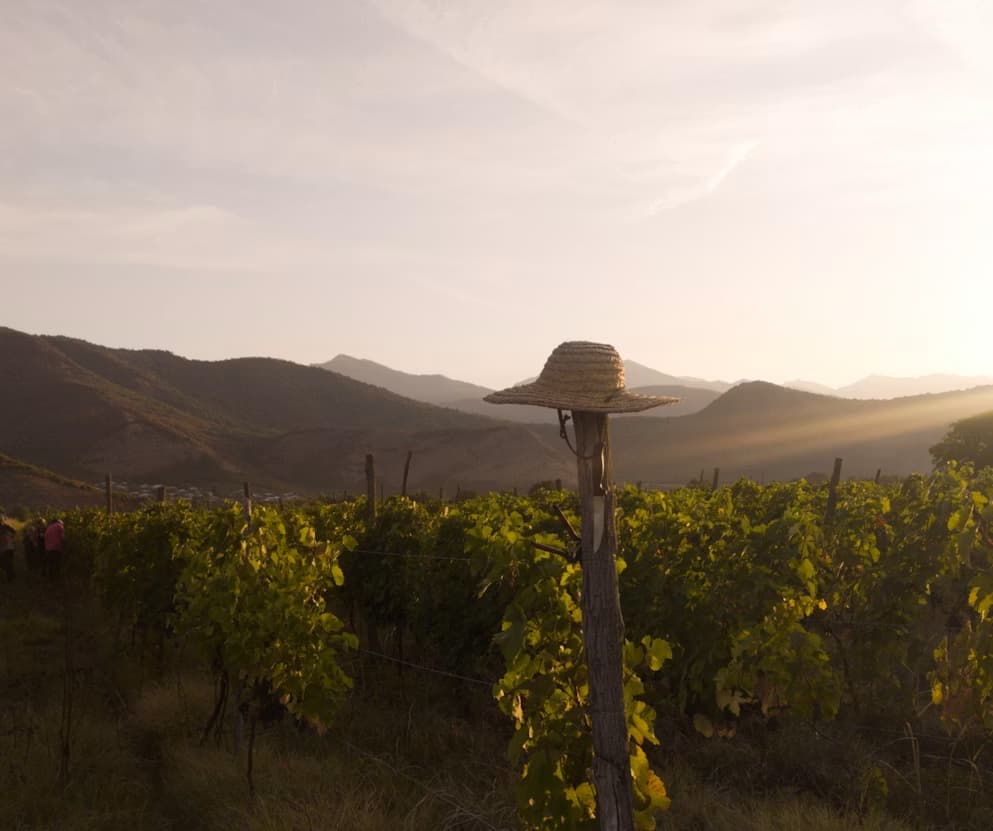
Guests sleep at the winery. In the morning, there are grapes on the vine outside the window.
Ready to see how the week unfolds?
The itinerary — nine days, three tiers, every decision explained — is on the Tours page. Or if you have questions that a page cannot answer, the enquiry form takes two minutes and commits you to nothing.
The founder responds personally within 24 hours.